
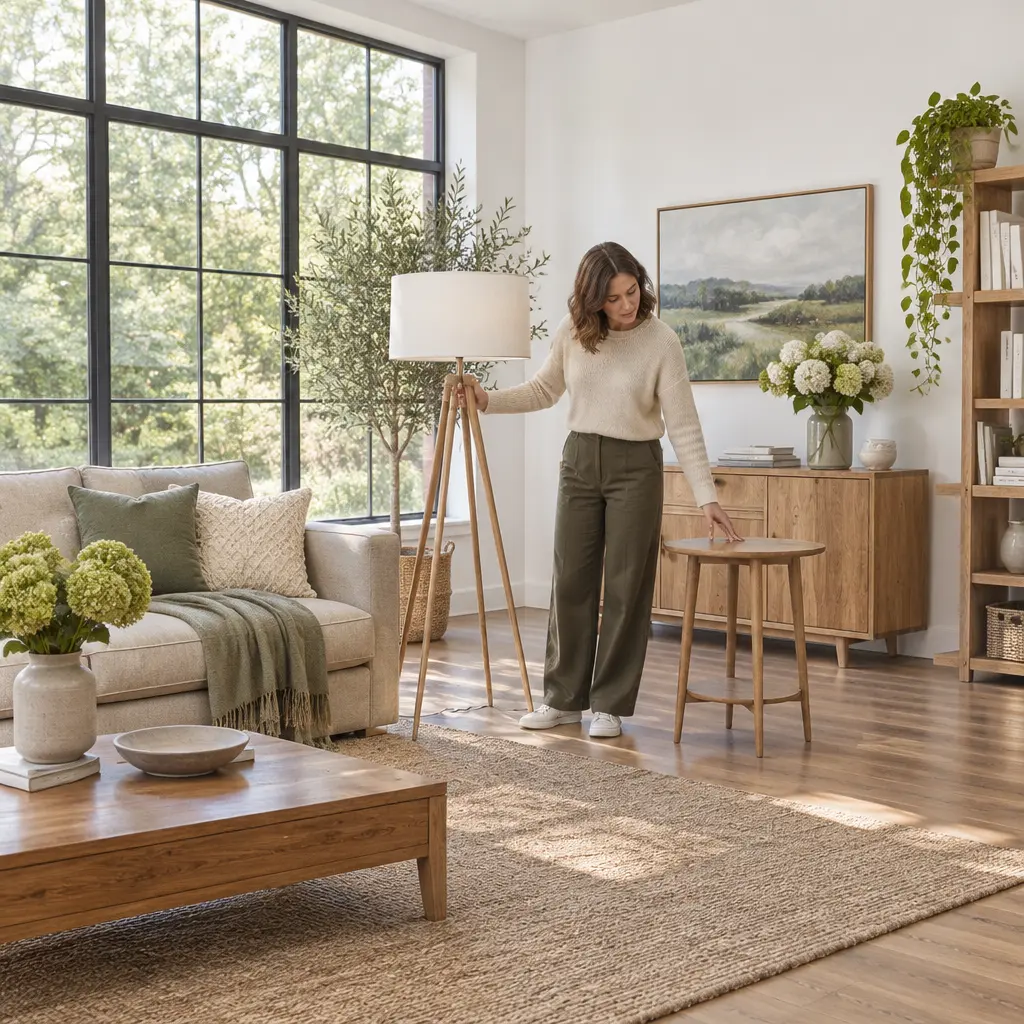
Modern décor combines contemporary forms, functional design, and personal expression to make a home feel current without requiring a luxury budget. Quality pieces are available from accessible retailers, secondhand marketplaces, and specialist design brands; the best choice depends on materials, construction, fit, and how often an item will be used. The U.S. Bureau of Labor Statistics’ Consumer Expenditure Survey tracks household spending on furnishings and related goods, underscoring that home décor is a recurring consumer category—not just a one-time design splurge. By comparing budget, mid-range, and premium sources and checking durability before buying, shoppers can build a modern interior that looks considered and lasts.
Find quality modern décor at every price point
Quality modern décor is furniture, lighting, textiles, and accessories that express contemporary design while meeting practical standards for materials, construction, comfort, and longevity. The term “modern” is often used broadly in retail, but it can refer to clean lines, restrained ornament, useful forms, and a mix of natural and manufactured materials. The right purchase is not necessarily the most expensive: shoppers can prioritize construction and everyday performance, then choose where visual impact justifies spending more.
A practical search spans three connected options: lower-cost retailers for trend-forward basics, mid-range brands for a balance of finish and durability, and premium makers or vintage dealers for distinctive design and longer-term investment. Before choosing among them, it helps to define what “quality” means for the specific item.
Quality modern décor means fit, materials, and construction
There is no single universal price or label that defines quality décor. The Federal Trade Commission’s guidance on textile and furniture-related product claims emphasizes that consumers should pay attention to truthful information about materials and product characteristics. Applied to home décor, quality is best assessed through an item’s intended use, disclosed materials, workmanship, care requirements, and available product details—not styling photographs alone.
Key characteristics include stable construction, suitable materials, consistent finishing, usable dimensions, and repair or care instructions. A decorative object may be judged mainly on finish and proportion, while a sofa or dining table also needs to withstand frequent use. These differences lead naturally to several categories shoppers should evaluate separately.
Furniture: inspect the structure before the silhouette
Furniture quality describes how well a piece’s frame, joints, supports, upholstery, and finish suit its expected workload. For a sofa, ask about the frame and suspension, assess seat support, and check whether cushion covers can be cleaned or replaced. For tables and case goods, examine stability, drawer operation, edge finishing, and how the product is assembled. A low price can be appropriate for a lightly used side table, but an everyday sofa or bed frame deserves closer scrutiny because failure affects comfort as well as replacement cost.
Measure the room, doorways, stairwells, and elevator before ordering. Retailer specifications should state dimensions and materials; reviews can help reveal recurring problems such as wobbling, difficult assembly, or upholstery wear. When a product page does not explain its construction, contact the seller before purchase rather than assuming the appearance signals durability.
Lighting and accessories: balance function with finish
Lighting and accessories include lamps, mirrors, rugs, artwork, and smaller objects that shape a room’s mood without necessarily requiring a large investment. Quality in this category means that the item works safely and reliably, fits its scale and purpose, and has a finish suited to its location. For lamps, verify the bulb type and electrical details; for rugs, check fiber content, backing, dimensions, and cleaning needs; for mirrors and wall art, consider mounting hardware and weight.
Because these purchases are often easier to replace than major furniture, they offer a low-risk way to test a color or trend. Still, scale matters: a correctly sized rug or well-placed floor lamp can improve a room more than several inexpensive decorative objects.
Materials and care: use labels to compare like with like
Material quality depends on the product and its intended use; “natural,” “solid,” or “premium” alone does not guarantee performance. Compare wood construction, veneer, metal thickness, textile fiber content, and care instructions. The Federal Trade Commission’s textile labeling rules require covered textile products to disclose fiber content, country of origin, and manufacturer or responsible business identity, giving shoppers useful information for comparing fabrics.
Check whether finishes can tolerate sunlight, moisture, pets, or frequent cleaning in the room where the item will live. A delicate fabric may be an excellent choice for an occasional chair but impractical for a family’s main sofa. With those evaluation criteria in mind, shoppers can compare retailers by price tier rather than relying on brand reputation alone.
Shop modern décor by budget tier
Price tiers are useful starting points, not fixed quality ratings. Prices, product ranges, and availability change, and a retailer may offer both entry-level and higher-specification items. Compare current product details, delivery costs, return terms, warranties, and assembly requirements before treating two pieces as equivalent.
Budget-friendly: choose selective upgrades and flexible basics
Budget-friendly décor suits shoppers who want to refresh a room with limited upfront spending. IKEA, Target, and discount home retailers commonly carry accessible lighting, textiles, storage, and small furniture, while resale platforms and local thrift shops can surface used pieces at a range of prices. These sources are especially useful for accent tables, cushions, lamps, and temporary or first-apartment furnishings.
To avoid false economies, focus spending on items that receive heavy use and choose simpler, replaceable pieces for short-term trends. Read assembly instructions and reviews, inspect secondhand furniture for stability, pests, odors, and damage, and calculate the total cost after delivery or transport. Repainting or replacing hardware can also give a sound secondhand piece a modern look for less than buying new.
Mid-range: look for better finishes and more choice
Mid-range décor generally targets buyers who want more design variety, finish options, or construction detail than basic entry-level ranges while remaining below many luxury prices. Retailers such as Article, West Elm, and Crate & Barrel offer modern and contemporary furniture and home accessories, though prices and specifications vary widely across their collections.
At this tier, compare the exact product rather than the retailer’s overall image. Check whether a table is solid wood, veneer, or a combination; review upholstery composition and cleaning codes; and confirm warranty coverage. Mid-range purchases can be especially worthwhile for central pieces—such as a dining table, bed, or sofa—that will be used daily and anchor the room visually.
Premium: pay for design, service, and long-term ownership
Premium décor includes higher-priced designer furniture, made-to-order upholstery, specialist lighting, and collectible vintage or antique pieces. Design Within Reach, Herman Miller, and authorized dealers offer examples of design-led furniture, while independent showrooms may provide customization, trade expertise, or restoration services. The premium may reflect a designer’s work, manufacturing approach, materials, customization, brand, or service; it does not automatically mean every item is the best fit.
Before buying, verify dimensions, lead times, delivery and installation costs, return restrictions, warranty terms, and repair options. For vintage purchases, ask about provenance where relevant, condition, structural repairs, and reupholstery costs. A premium item is most defensible when its design, comfort, construction, and expected years of use match the buyer’s priorities.
Compare sellers, resale options, and total cost
Finding quality décor is not only a matter of choosing a store; it also means comparing purchase channels. New retail provides standardized product information and return policies, while secondhand shopping can offer lower prices and distinctive designs but requires more inspection. The U.S. Environmental Protection Agency identifies reuse as one way to reduce waste, making resale furniture a practical option for shoppers who want to extend the life of usable goods.
Online retailers: verify specifications and policies
Online retailers make it easy to compare styles and prices, but product images can obscure scale, texture, and construction. Check dimension diagrams, material descriptions, assembly requirements, shipping dates, and return fees. Look for reviews that discuss long-term use rather than only delivery, and confirm whether a seller or a third-party marketplace merchant handles service and returns.
For large items, measure access routes and confirm whether delivery includes room-of-choice placement, assembly, and packaging removal. The advertised price may not reflect the full cost of getting a usable item into the home.
Vintage and secondhand: inspect condition and provenance
Secondhand décor includes used furniture from consignment stores, estate sales, local listings, and online resale marketplaces. It can provide access to discontinued designs and sturdy older pieces, but condition varies. Test drawers and doors, check joints and legs, inspect upholstery seams, and ask about smoke, pet, water, or pest exposure. For valuable design pieces, request documentation or seek an experienced dealer’s assessment rather than relying on a label or listing title.
A useful comparison chart can list each candidate’s purchase price, delivery or restoration cost, materials, condition, return options, and expected use. This makes a modestly priced secondhand item easier to compare fairly with a new product.
Calculate value over time, not just sticker price
Total cost of ownership considers the purchase price alongside delivery, assembly, upkeep, repairs, and likely replacement. A less expensive chair that must be replaced quickly may cost more over time than a repairable chair with a higher initial price. There is no reliable universal lifespan for décor because use, materials, care, and household conditions differ, so shoppers should compare warranties and care instructions rather than assume a fixed durability period.
A simple personal estimate is to divide the expected total cost by the number of years the item is likely to serve its intended purpose. Treat the result as a planning aid, not a guarantee; uncertain lifespan and resale value should be acknowledged.
Build a modern room with a deliberate spending plan
A deliberate plan helps shoppers combine price tiers without making a room feel inconsistent. Start with the room’s function and a few practical measurements, then identify the pieces that need comfort or durability most. The U.S. Bureau of Labor Statistics’ Consumer Expenditure Survey provides context on household spending categories, but individual budgets vary; the most useful budget is one that reflects a household’s own needs and cash flow.
Prioritize high-use pieces
Allocate more attention—and, where possible, more budget—to furniture used every day, such as a mattress, sofa, desk chair, or dining table. Choose lower-cost accessories for items that are easy to replace or update. This approach makes a room more comfortable while preserving flexibility for future changes.
Use a small palette to connect different price points
A limited palette of colors, finishes, and shapes helps pieces from different retailers feel intentional together. For example, a simple neutral sofa can work with a vintage wood table, a contemporary lamp, and affordable textiles when their tones and proportions relate. Repeating one or two materials—such as warm wood and black metal—can create visual continuity without buying a matching set.
Buy gradually and leave room to revise
Buying gradually allows shoppers to test how a room is used before committing to every accessory. Begin with essential furniture, live with the layout, and then add lighting, art, rugs, or storage based on actual needs. Save product specifications, receipts, and care instructions so future maintenance and replacement decisions are easier.
Conclusion: quality modern décor is a matter of informed priorities
Quality modern décor can be found at every price point when shoppers judge pieces by their intended use, materials, construction, care needs, and total cost—not by price or styling alone. Budget retailers and resale sources can furnish flexible basics; mid-range brands can offer a useful balance of design and specification; and premium makers may suit buyers seeking particular design, customization, or service. Compare product details and policies, inspect secondhand goods carefully, and put more of the budget toward high-use pieces.
Start by measuring your room, setting a realistic spending limit, and listing the features that matter most. Then compare a few options across new and resale sources before committing. For further research, consult retailer product specifications, government consumer guidance on textile labeling, and the EPA’s materials on reuse.
Sources: U.S. Bureau of Labor Statistics, Consumer Expenditure Surveys, https://www.bls.gov/cex/; Federal Trade Commission, Textile Fiber Products Identification Act, https://www.ftc.gov/legal-library/browse/rules/textile-fiber-products-identification-act; U.S. Environmental Protection Agency, Sustainable Materials Management: Non-Hazardous Materials and Waste Management Hierarchy, https://www.epa.gov/smm/sustainable-materials-management-non-hazardous-materials-and-waste-management-hierarchy; IKEA, Living Room Furniture, https://www.ikea.com/us/en/cat/living-room-furniture-10475/; Target, Home Décor, https://www.target.com/c/home-decor/-/N-5xtub; Article, Furniture and Décor, https://www.article.com/; West Elm, Furniture and Home Décor, https://www.westelm.com/; Crate & Barrel, Furniture and Home Décor, https://www.crateandbarrel.com/; Design Within Reach, Modern Furniture and Lighting, https://www.dwr.com/; Herman Miller, Home Furniture, https://www.hermanmiller.com/products/
