
Modern home décor is the intentional selection of furniture, colors, lighting, textiles, and accessories to make a home functional and visually cohesive. Choosing it on a budget means prioritizing high-impact changes, comparing total costs, and mixing new purchases with items you already own. The U.S. Bureau of Labor Statistics’ Consumer Expenditure Surveys track household spending on furnishings and household equipment, underscoring why it helps to set a clear limit before shopping. A practical plan starts with needs and measurements, then weighs affordable décor options, sustainable upgrades, and room-by-room priorities.
Budget Planning Shapes Modern Home Décor Choices
A décor budget is a spending plan for improving a home’s appearance and function without exceeding an amount a household can afford. It should include the full cost of an item—not just its sticker price—including delivery, assembly, supplies, and any necessary repairs. The Consumer Financial Protection Bureau’s budgeting guidance emphasizes tracking income and expenses to understand what is available for planned spending; that principle applies to home projects as much as other purchases.
Budget-conscious decorating can involve several approaches: refreshing a room with paint and textiles, investing in durable furniture, finding secondhand pieces, or completing improvements gradually. The right combination depends on the room’s purpose, the condition of existing items, and the time available. Before browsing stores, write down the room’s main problem and identify which change would solve it most effectively.
Set a Room-by-Room Spending Limit
A room-by-room limit assigns a maximum amount to each space or project. List essential purchases separately from optional upgrades, and reserve part of the total for unexpected costs. For example, a living-room plan might prioritize a functional sofa or improved lighting before decorative objects. A simple written list helps prevent small purchases from accumulating into an unplanned expense.
Measure Before You Buy
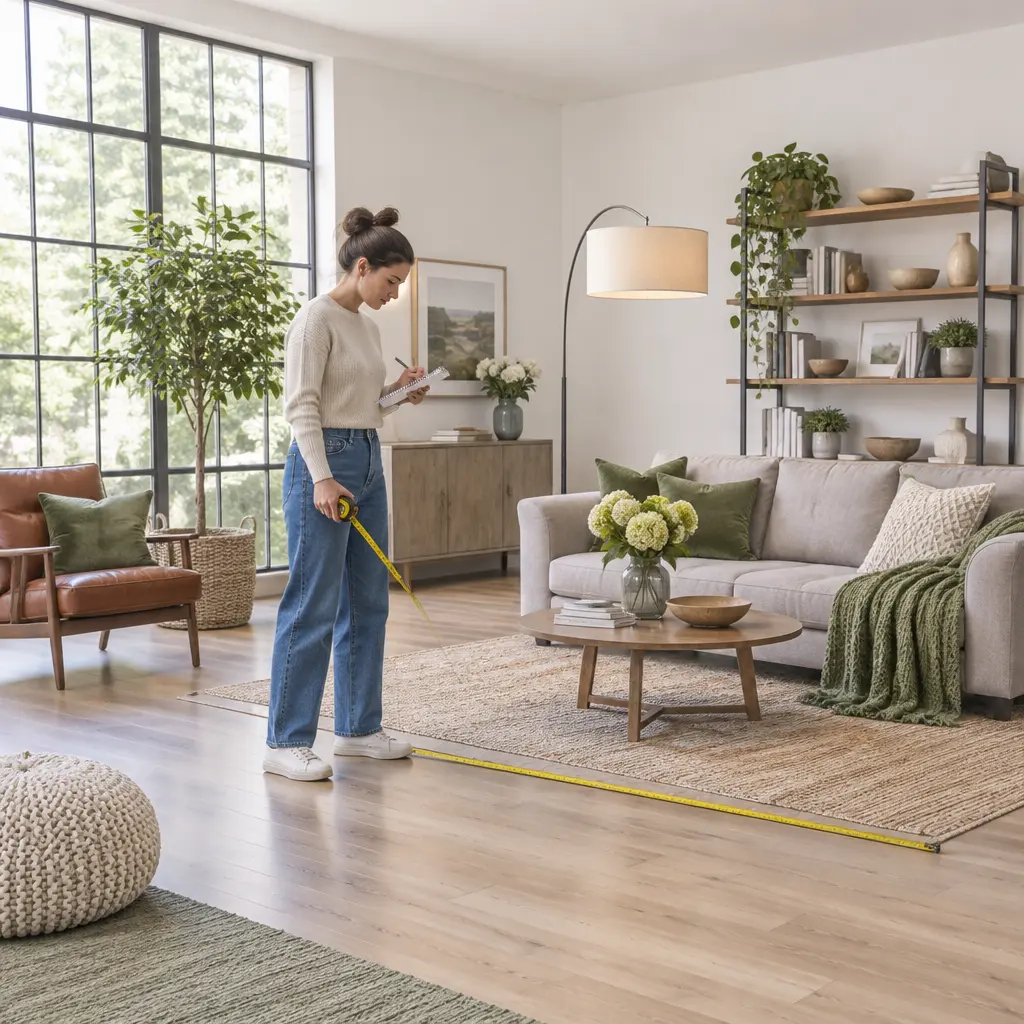
Measurement is the process of checking a room, doorway, and furniture footprint before purchasing. Record wall lengths, ceiling height, window positions, and the width of access routes. Then compare those measurements with product dimensions. This reduces the risk of paying for an item that blocks circulation, overwhelms the room, or cannot pass through the doorway.
Prioritize Cost per Use and Quality
Cost per use compares an item’s price with how often it is expected to be used. A frequently used dining chair or desk may justify a higher initial cost than a trend-led accessory. Check construction, materials, care requirements, return policies, and warranty terms. Comparing these details helps distinguish a genuinely economical choice from a low-priced product that may need early replacement.
Affordable Modern Décor Balances Style and Function
Modern décor commonly emphasizes clean lines, practical forms, uncluttered spaces, and a considered mix of materials. It does not require buying an entire matching collection. A room can feel contemporary through a few coordinated choices—such as a restrained color palette, useful lighting, and streamlined storage—while keeping existing furniture that still works.
The bridge between style and affordability is selective updating: retain what is useful, repair what is sound, and spend on the items that most affect comfort or visual balance. This approach also makes it easier to compare lower-cost changes with larger purchases.
Use Paint, Textiles, and Lighting for High-Impact Changes
High-impact updates are relatively modest changes that noticeably alter a room’s appearance or use. Paint can refresh walls or an old piece of furniture, while cushion covers, curtains, and rugs introduce color and texture without replacing major furnishings. Layered lighting—ambient, task, and accent light—can make a space more comfortable and useful. Before buying bulbs or fixtures, check fitting type, brightness, color temperature, and whether installation requires professional help.
Choose Versatile Furniture and Storage
Versatile furniture serves more than one purpose or adapts as needs change. Examples include an extendable dining table, an ottoman with storage, or shelving that can be rearranged. Measure carefully and consider how often a multi-purpose feature will actually be used. Open shelves can display attractive objects, but closed storage may be more practical for reducing visible clutter.
Build a Cohesive Look Without Buying a Set
A cohesive room repeats a limited number of colors, shapes, or materials so that different pieces feel related. Choose a small palette, then repeat it in details such as artwork, cushions, and hardware. Mixing wood tones or combining new and older furniture can work when the pieces share a common feature, such as scale, finish, or silhouette. This gives the room character without requiring a costly matching suite.
Secondhand and Sustainable Décor Can Reduce Costs
Secondhand décor includes pre-owned furniture and accessories acquired through resale shops, auctions, community marketplaces, or reuse organizations. Buying used can lower the purchase price and keep serviceable items in use, but savings depend on condition, transport, and repair costs. The U.S. Environmental Protection Agency’s guidance on sustainable materials management supports considering reuse as part of reducing waste; for shoppers, that means evaluating an item’s remaining useful life rather than focusing on price alone.
Reuse is not automatically the best choice for every item. Check for stability, odors, pests, water damage, and missing parts, and consider whether upholstery or electrical components need professional attention. Once condition is assessed, compare the total cost with a new alternative.
Shop Used Furniture with a Condition Checklist
A condition checklist is a brief inspection of an item’s structure, surfaces, and function. For a chair, test the joints and legs; for a drawer unit, open and close every drawer; for upholstered furniture, inspect seams and look for signs of moisture or pests. Ask about dimensions and pickup arrangements before committing, and factor in transportation or cleaning expenses.
Repair, Refinish, or Repurpose Existing Pieces
Repair restores an item’s function, refinishing renews its surface, and repurposing gives it a different use. Tightening a loose table, changing cabinet pulls, sanding a small surface, or using a sturdy side table as a nightstand can extend an item’s usefulness. The U.S. Environmental Protection Agency’s waste-prevention approach offers a useful principle: consider whether an existing product can be maintained or reused before replacing it. Compare the cost of materials and labor with the price of a suitable replacement.
Select Durable Materials and Lower-Waste Options
Durable décor is made to withstand expected use and routine care. Read material descriptions and cleaning instructions, and look for repairable construction where practical. Natural, recycled, or reclaimed materials may appeal to shoppers seeking lower-impact choices, but labels alone do not establish overall environmental performance. Consider durability, maintenance, transport, and whether the product meets the room’s needs.
A Room-by-Room Plan Keeps Modern Décor Spending Focused
Room-by-room decorating organizes purchases around how each space is used. A bedroom may need better light control and storage, while a home office may benefit more from task lighting and an ergonomic chair. Start with the room’s most persistent limitation, then compare possible solutions by cost, usefulness, and expected lifespan. This prevents decorative purchases from taking priority over practical needs.
Living Room: Prioritize Seating and Circulation
In a living room, seating and clear movement paths usually matter more than small decorative accents. Check the dimensions of sofas and chairs against the floor plan, and leave enough room to move comfortably between them. If existing seating is sound, a washable throw, replacement cushion covers, or a rearranged layout may refresh the space for less than a new sofa.
Bedroom: Focus on Rest, Storage, and Light Control
Bedroom décor should support rest and make daily routines easier. Blackout or lined curtains, bedside lighting, and practical storage may provide more value than decorative upgrades. Check curtain measurements and light-control needs before ordering, and consider whether existing furniture can be reorganized to free floor space.
Kitchen and Dining Areas: Refresh Small Details
Kitchen and dining updates can focus on frequently used details: durable seat cushions, useful task lighting, washable textiles, or replacement cabinet hardware. Verify that materials suit the room’s exposure to heat, moisture, and cleaning. In a rental, check the agreement and obtain permission before making permanent changes such as painting cabinets or altering fixtures.
Home Office: Invest in Everyday Comfort
A home office is a workspace used regularly for computer or other desk-based tasks. Because the desk and chair may be used for extended periods, comfort, adjustability, and fit deserve careful consideration. Measure desk height and available space, test chair support when possible, and improve task lighting to reduce reliance on overhead light alone. Accessories can be added later if the core setup is functional.
Conclusion: Choose Décor That Fits Both Home and Budget
Choosing modern home décor within budget begins with a spending limit, accurate measurements, and a clear priority for each room. Affordable paint, textiles, lighting, and versatile furniture can create a cohesive look, while secondhand shopping, repair, and reuse may extend value when items are in sound condition. Compare total cost and expected use before purchasing, and make changes in stages rather than trying to finish every room at once. Review your measurements and budget, then choose one practical improvement to start with.
Sources: U.S. Bureau of Labor Statistics, Consumer Expenditure Surveys, https://www.bls.gov/cex/; Consumer Financial Protection Bureau, Your Money, Your Goals: A Financial Empowerment Toolkit, https://www.consumerfinance.gov/consumer-tools/educator-tools/your-money-your-goals/; U.S. Environmental Protection Agency, Sustainable Materials Management: Non-Hazardous Materials and Waste Management Hierarchy, https://www.epa.gov/smm/sustainable-materials-management-non-hazardous-materials-and-waste-management-hierarchy.
