
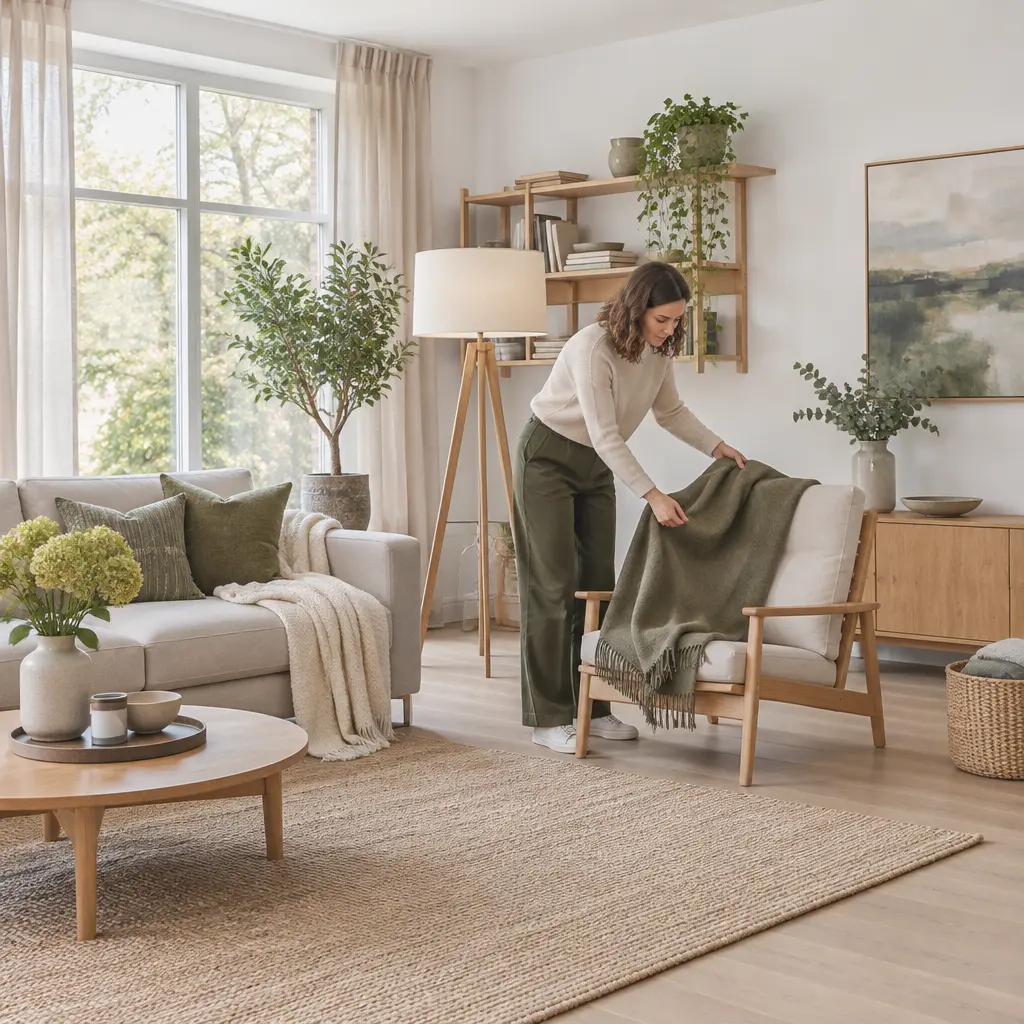
Scandinavian-inspired accents are furnishings, materials, and decorative details drawn from Nordic design traditions and adapted for contemporary homes. They can make a modern room feel warmer and more practical through natural wood, restrained color, tactile textiles, and carefully chosen lighting. This approach is relevant beyond aesthetics: the U.S. Environmental Protection Agency estimates that people spend about 90% of their time indoors, making comfort and the quality of indoor environments significant considerations. The sections below explain the principles behind Scandinavian accents, show how to apply them through materials, color, lighting, and accessories, and offer practical guidance for balancing Nordic references with a modern home.
Scandinavian-inspired accents: definition and design principles
Scandinavian-inspired accents are small-scale design choices that evoke the functional, uncluttered, nature-connected interiors associated with Denmark, Sweden, and Norway. The term describes an adaptable design influence rather than one fixed historical style. The Nordic Council of Ministers’ report Nordic Design and Architecture presents design in the region as shaped by social, cultural, and environmental contexts; in homes, that influence commonly appears as practical forms, honest materials, and attention to everyday use.
The approach is often confused with minimalism, but it need not mean empty rooms or an all-white palette. Its distinguishing feature is purposeful simplicity: each accent should contribute function, comfort, visual balance, or a connection to nature. A room may include a sculptural lamp, a wool throw, or a handmade ceramic bowl while remaining calm and contemporary.
Function, simplicity, and everyday comfort
Function-led design prioritizes useful objects with clear forms. A bench can provide seating and shoe storage; a pendant can illuminate a dining table while becoming a focal point; and a side table can add a surface without overwhelming a compact room. This practical emphasis is consistent with the broader Nordic design tradition of making useful goods thoughtfully, rather than treating decoration as separate from daily life.
Natural materials and sensory warmth
Natural materials—including wood, wool, linen, leather, stone, and ceramics—bring visible grain and tactile variation to otherwise streamlined spaces. The Forest Stewardship Council recommends looking for credible chain-of-custody certification when choosing wood products; certification can help buyers identify materials sourced under audited forest-management and supply-chain standards. For textiles, compare fiber content, durability, care requirements, and the maker’s sourcing claims rather than relying on a “natural” label alone.
Hygge as a related concept
Hygge is a Danish concept associated with coziness, conviviality, and a sense of well-being. It is not a prescribed decorating style, but it helps explain why Scandinavian-inspired rooms often combine soft lighting, comfortable seating, warm textures, and spaces for gathering. A wool blanket or candle can support that atmosphere, but the concept is better understood as an experience of comfort than as a shopping checklist.
Scandinavian-inspired accents use color and texture to soften modern rooms
Color and texture provide a bridge between functional simplicity and a welcoming feel. Instead of adding many decorative objects, use a limited palette and vary surface qualities: matte beside glossy, smooth beside woven, or pale wood beside a darker accent. This produces visual interest without sacrificing the clarity associated with Nordic-inspired interiors.
A restrained, nature-led palette
A nature-led palette may combine warm white, soft gray, sand, muted green, or blue with wood tones. These colors are not mandatory; they are useful because they coordinate easily with daylight, natural materials, and contemporary furniture. Try a neutral foundation with one or two accent colors, then repeat each accent in more than one place—for example, a green cushion echoed by a plant or artwork.
Layered textiles for warmth
Layered textiles add softness and help define areas in open-plan rooms. A wool rug can anchor a seating group, linen curtains can filter daylight, and cushions in varied weaves can make a sofa feel more inviting. For households with allergies or pets, check cleaning instructions and consider tightly woven, washable fabrics. Texture should clarify a room’s use, not create unnecessary maintenance.
Wood accents and responsible sourcing
Wood accents—from a dining chair to a picture frame—introduce natural variation and visual warmth. Choose a small number of compatible wood tones rather than trying to match every piece exactly. When purchasing new furniture or flooring, ask about species, origin, finishes, repairability, and recognized sourcing certification. Reusing or buying secondhand can also extend an existing product’s life and reduce demand for newly manufactured items.
Scandinavian-inspired accents make lighting and layout more inviting
Lighting and layout turn a collection of Nordic-inspired objects into a usable room. A successful plan balances general illumination with focused and ambient light, while furniture placement supports movement and conversation. The U.S. Department of Energy notes that light-emitting diode (LED) bulbs use at least 75% less energy and last up to 25 times longer than incandescent lighting, making efficient bulbs a practical option for layered home lighting.
Layered lighting for different tasks
Layered lighting uses several sources for different purposes: ceiling fixtures for general light, task lamps for reading or work, and lower-level lamps for a softer evening atmosphere. Place a reading lamp beside a chair and a pendant above a dining table, adjusting brightness to suit the activity. Where fixtures allow it, dimmers and warm-white bulbs can help create a more comfortable evening setting.
Open circulation and purposeful furniture
Purposeful layout keeps circulation routes clear and gives each object room to function. In a small living area, a leggy chair can feel visually lighter than a bulky one, while a storage bench can combine seating with a practical place for everyday items. Before buying, measure the room and check that doors, drawers, and walkways remain usable; restraint is most effective when it improves how the space works.
A real-world example: updating a compact living room
Consider a compact living room with a neutral sofa, limited daylight, and little storage. A Nordic-inspired update might add a pale-wood side table, a textured rug sized to connect the seating, a floor lamp for reading, and a lidded basket for blankets. A single artwork or cushion in a muted color supplies contrast. The result draws on Scandinavian principles without requiring a full renovation or replacing serviceable furniture.
Scandinavian-inspired accents bring nature indoors thoughtfully
Nature-connected accents can include plants, botanical artwork, daylight, and materials with visible natural variation. They are most effective when chosen for the room’s actual conditions and the household’s needs, rather than added as decoration without a plan.
Plants, daylight, and natural views
A plant can add shape and color to a quiet corner, while mirrors can help distribute available daylight when placed thoughtfully. Select plants according to light levels, watering needs, and household safety considerations. The U.S. Environmental Protection Agency’s estimate that people spend about 90% of their time indoors underscores why pleasant, usable indoor environments matter; it does not, by itself, mean that houseplants can replace ventilation or other measures for indoor air quality.
Artisan objects and personal meaning
Handmade ceramics, woven baskets, and small pieces of local craft can make a restrained interior feel personal. Choose objects with a clear role or a meaningful connection, then display them in small groupings with space around them. This keeps craftsmanship visible without turning shelves and surfaces into clutter.
How to bring Scandinavian-inspired accents into a modern home
A gradual approach makes it easier to find the right balance between Nordic influence and an existing modern interior. Start with the room’s needs, then select a few complementary changes instead of trying to reproduce a showroom image.
- Identify one practical improvement, such as better reading light, more accessible storage, or a softer seating area.
- Choose a simple base palette and add one or two muted colors that work with existing finishes.
- Introduce a limited mix of natural materials and textures, checking durability and care requirements.
- Use layered lighting to support both tasks and relaxation, with efficient bulbs where appropriate.
- Edit the finished room: keep objects that serve a purpose, add comfort, or hold personal meaning.
Conclusion: Scandinavian-inspired accents balance warmth and purpose
Scandinavian-inspired accents bring together functional design, restrained color, natural materials, layered lighting, and personal details. These elements can soften a modern home without sacrificing usability, and they can be introduced gradually through choices such as a responsibly sourced wood piece, a tactile textile, or a well-placed lamp. Begin with one room and one practical goal, then refine the space around comfort, durability, and the way you live. For further guidance, consult established resources on Nordic design, responsible wood sourcing, and energy-efficient lighting before making larger purchases.
Sources: U.S. Environmental Protection Agency, “Indoor Air Quality,” https://www.epa.gov/report-environment/indoor-air-quality; Nordic Council of Ministers, Nordic Design and Architecture, https://pub.norden.org/nord2023-019/; Forest Stewardship Council, “FSC Standards,” https://fsc.org/en/standards; U.S. Department of Energy, “LED Lighting,” https://www.energy.gov/energysaver/led-lighting
