
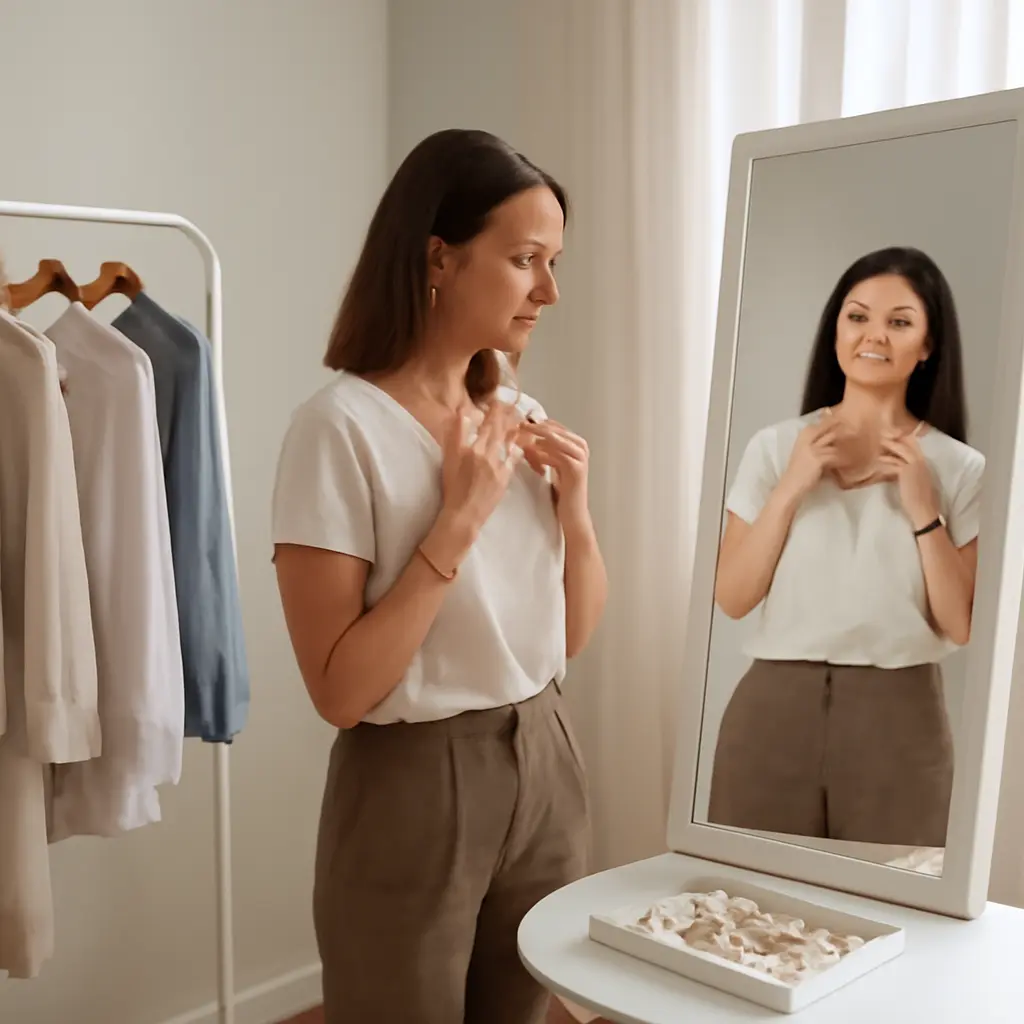
Fashion editors treat jewelry layering as a matter of proportion, spacing, and personal meaning—not simply piling on more pieces. Thoughtful layers let necklaces, bracelets, rings, and earrings read as a coordinated whole while still showing their individual character. The practical principles are straightforward: vary chain lengths and textures, balance visual weight, account for comfort and tangling, and build around a focal piece. There is no universal formula, but these techniques help explain why an intentional stack looks polished rather than accidental.
Jewelry layering depends on proportion and visual balance
Jewelry layering is the practice of wearing multiple pieces in the same area—or across connected areas, such as the neck and ears—in a way that creates a considered composition. It is a styling method, not a fixed set of rules. Fashion publications such as Vogue and Harper’s Bazaar commonly illustrate the approach through combinations of different necklace lengths, mixed materials, and rings worn across several fingers. Those examples are editorial inspiration rather than evidence of a single correct standard.
The underlying idea is visual hierarchy: one piece may lead, while the others provide contrast or support. Scale, spacing, neckline, clothing texture, and the wearer’s comfort all influence the result. Because there is no authoritative research establishing an ideal number of layered pieces, specific formulas should be understood as styling suggestions—not scientific rules.
Length creates separation between necklaces
A necklace layer is easier to read when the pieces do not all sit at the same point. A short chain can frame the base of the neck, a medium-length pendant can become the focal point, and a longer strand can extend the composition downward. The exact spacing depends on the wearer and the garment; the useful test is whether each necklace remains visible when worn together.
Start with two necklaces of noticeably different lengths, then add a third only if it contributes something distinct. A fine chain beside a larger pendant, for example, creates contrast without asking both pieces to compete. A collared shirt, high neckline, or deep V-neck changes where the layers appear, so check the combination with the actual outfit rather than judging the jewelry alone.
Texture and weight make mixed metals feel intentional
Mixing gold, silver, and other finishes works best when the contrast looks deliberate. Repeat a metal or finish at least once elsewhere in the combination, or connect the pieces through a shared feature such as similar chain links, a common stone, or a consistent level of shine. This creates a visual relationship without requiring every piece to match.
Weight matters as much as color. A substantial chain can overpower several delicate strands, while two similarly bold pieces may compete. Editors’ street-style and editorial pages often show mixed-metal looks, but photographs cannot establish a universal balance rule. Use them as examples, then adjust for the scale of the jewelry, the outfit, and the wearer.
Jewelry layering works across necks, wrists, hands, and ears
Necklaces are only one form of layering. The same principles—contrast, spacing, and a clear focal point—apply to bracelet stacks, rings, and multiple ear piercings. These categories are related, but each has different practical constraints: necklaces can tangle, bracelets can knock together, rings must fit comfortably, and earrings must suit the wearer’s piercings and tolerance for weight.
Bracelet stacks need movement and comfort
A bracelet stack combines multiple wrist pieces, such as a watch, chain bracelet, bangle, or cuff. Varying their shapes and surfaces makes the group more legible; combining pieces that are all wide or rigid can feel crowded and restrict movement. Try the stack while writing, typing, or using a phone, and remove anything that catches on sleeves or repeatedly strikes the watch face.
A useful starting point is one structured piece, such as a watch or cuff, paired with one or two more flexible bracelets. This is a styling suggestion, not a required count. Jewelry-care guidance from the Gemological Institute of America emphasizes that gemstones and settings need appropriate handling and cleaning; pieces that rub together or snag can require extra attention, especially when they include delicate settings.
Ring combinations balance across the hand
Ring layering includes stacking bands on one finger and distributing rings across several fingers. A wider ring can anchor a hand, while slimmer bands add detail. Leaving some fingers bare can provide visual breathing room and make individual designs easier to see. Most importantly, rings should not restrict circulation or movement; a stack that feels tight in changing temperatures is not a successful one.
For a more cohesive combination, repeat one quality—such as a similar metal, stone color, or geometric shape—while varying another. This approach gives the rings a connection without making them look like a matching set. If rings have raised stones or delicate prongs, check that neighboring pieces do not repeatedly catch against them.
Ear stacks depend on placement and earring weight
An ear stack combines earrings across multiple piercings, commonly pairing a larger stud or hoop near the lobe with smaller pieces higher on the ear. The arrangement follows the anatomy and piercing positions of the wearer, so a look that works for one person may not translate directly to another.
Varying earring size helps create a visual progression, but comfort should lead. The American Academy of Dermatology advises choosing nickel-free jewelry for people with nickel allergy and notes that allergic contact dermatitis can cause an itchy rash where jewelry touches the skin. Anyone who develops persistent irritation should stop wearing the suspected item and seek appropriate medical advice.
Jewelry layering improves with practical editing
The difference between a layered look and a crowded one is often editing. Before adding another piece, ask whether it contributes a new length, texture, shape, or personal detail. If it merely repeats what is already present, removing it may make the rest of the combination stronger.
Prevent tangling before wearing layered chains
Chains can twist together when their lengths, weights, or link structures are too similar. Choosing visibly different lengths and mixing chain styles can reduce the chance that they move as one tangled bundle, although no combination can guarantee they will stay separated throughout the day. A necklace layering clasp, designed to connect multiple chains at the back, is another option; check that it is compatible with the closures and comfortable against the neck.
Put necklaces on one at a time and check the arrangement from the front and back. After wear, store delicate chains separately or fasten their clasps before placing them in a jewelry box. The Gemological Institute of America recommends care suited to the materials and gemstones involved, so follow the maker’s guidance rather than assuming every piece can be cleaned or stored the same way.
Use outfit and occasion as part of the composition
A layered look should work with the clothing around it. Fine chains may disappear against a busy print, while a sculptural pendant can provide contrast against a plain top. Necklines affect where necklaces rest, and sleeves influence whether bracelets remain visible. These are practical visual considerations, not strict fashion laws.
For everyday wear, prioritize pieces that sit comfortably and can tolerate regular movement. For an event, a more dramatic focal piece may be appropriate, with quieter layers supporting it. Before leaving, check for snagging, movement, and any interaction between jewelry and clothing. A quick mirror check from several angles is often more useful than adding another accessory by habit.
Conclusion: edit jewelry layers for balance, comfort, and meaning
The most useful lessons behind editorial jewelry layering are simple: separate necklace lengths, balance texture and visual weight, adapt bracelet stacks and ring combinations to movement, and arrange ear stacks around comfort and placement. Practical care matters too: chains can tangle, settings can catch, and some people react to metals such as nickel. There is no required number of pieces or universal formula. Start with jewelry you enjoy, build around one focal detail, and edit until every layer has a reason to be there. For further guidance, consult reputable jewelry-care information and medical advice for persistent skin reactions.
Sources: Vogue, Fashion and Jewelry Editorial Coverage, https://www.vogue.com/; Harper’s Bazaar, Jewelry and Accessories Editorial Coverage, https://www.harpersbazaar.com/fashion/accessories/; Gemological Institute of America, Jewelry and Gemstone Care, https://www.gia.edu/gem-care-cleaning; American Academy of Dermatology, Nickel Allergy: How to Avoid Exposure and Reduce Symptoms, https://www.aad.org/public/diseases/eczema/types/contact-dermatitis/nickel-allergy
