
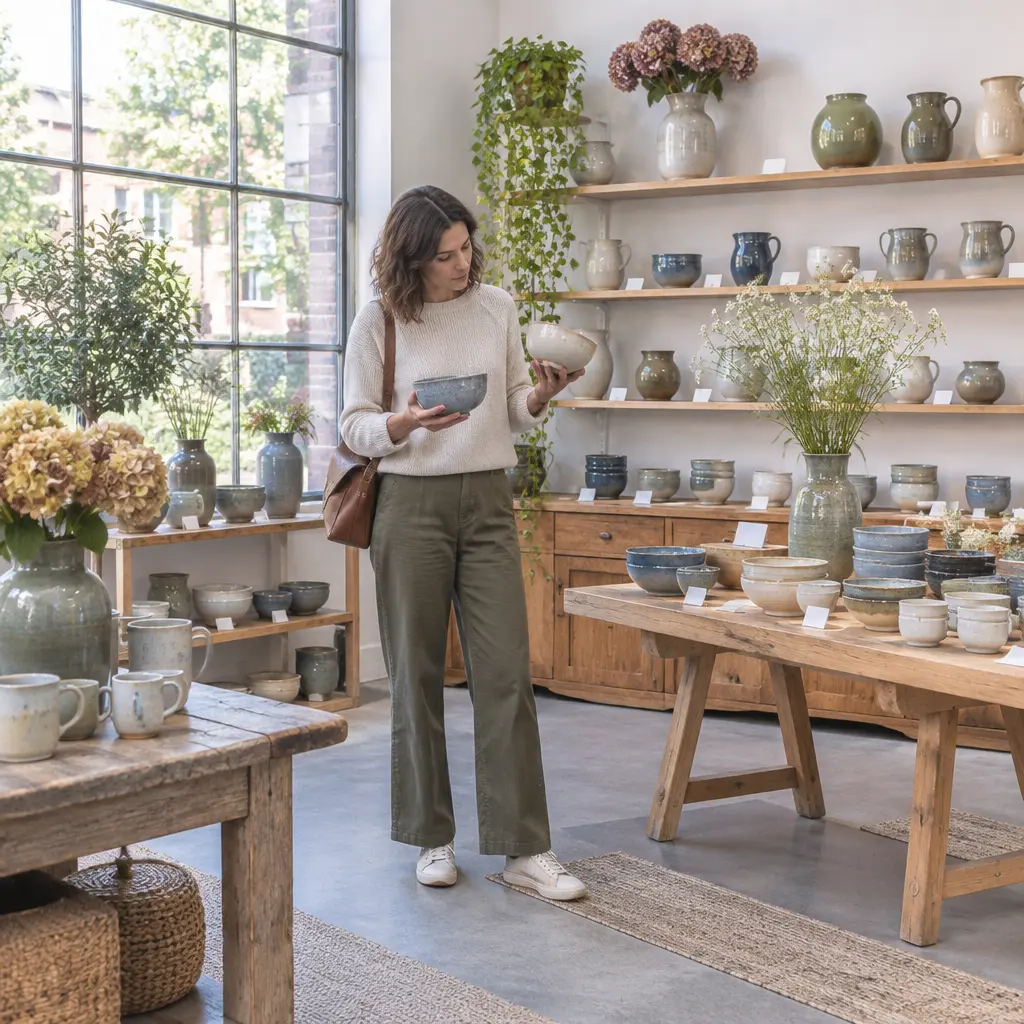
Boutique discovery rituals are deliberate, repeatable ways of exploring a shop that replace hurried, impulse-led browsing with curiosity, evaluation, and choice. They can include a slow first lap, tactile inspection, staff conversation, comparison, and a pause before purchase. The approach matters in a retail environment where buying is often prompted by emotion and convenience: a 2023 survey by the financial-services company LendingTree found that impulse spending was common among U.S. consumers, with respondents reporting an average of $151 in unplanned purchases per month. Intentional browsing does not require avoiding purchases; it helps shoppers align them with genuine needs, preferences, and budgets. This article defines discovery rituals, explains the behavioral ideas behind them, outlines practical in-store and digital versions, and considers how boutiques can encourage exploration without manipulating customers into buying more.
Define discovery rituals as a boutique browsing attribute
A discovery ritual is a small, structured sequence of actions that helps a person notice, assess, and remember options before deciding whether to buy. “Boutique discovery ritual” is a practical retail term rather than a standardized academic construct. Its components, however, connect to established research on consumer decision-making, mindful attention, and the design of retail environments. The American Psychological Association defines impulse buying as an unplanned purchase characterized by a strong desire to buy immediately; a browsing ritual creates space between that urge and the decision.
The relevant attribute is intentionality: the shopper chooses how to browse rather than following every promotional cue. A ritual may be personal, such as checking a garment’s materials and imagining three ways to wear it, or store-led, such as a guided visit organized around craft, provenance, and use. In either case, the aim is considered discovery—not a promise that shoppers will spend less in every instance.
A slow first lap
A slow first lap means viewing a section or store before selecting products. The shopper notices layout, categories, and visual themes without immediately putting items in a basket. This simple delay can reduce the chance that the first eye-catching display becomes the whole decision. It also supports a useful distinction between browsing for information and shopping with an immediate purchase goal.
Sensory and provenance-led discovery
Sensory discovery uses touch, visual detail, scent, sound, or demonstration to understand a product; provenance-led discovery adds information about its maker, materials, and production. These approaches are especially relevant to boutiques, where curation and specialist knowledge can distinguish a visit from scrolling through a large product feed. The ritual is most useful when the information clarifies quality or suitability rather than merely adding pressure or prestige.
A pause-and-compare decision
A pause-and-compare ritual asks shoppers to set an item aside briefly, compare it with alternatives, or revisit it after completing the browse. It converts an immediate “I want it” response into questions about fit, price, use, care, and what the item would replace. The pause is not a clinical treatment or a guaranteed safeguard; it is a practical prompt for more reflective choice.
Together, these ritual types turn browsing into a sequence of noticing and evaluation. Their value becomes clearer when considered alongside what research says about attention, store environments, and impulse purchases.
Explain how intentional browsing counters impulse consumption
Impulse consumption refers here to purchasing without prior intention, often following a sudden urge or an immediate environmental prompt. The concept overlaps with, but is not identical to, compulsive buying, which is a more persistent pattern associated with distress or impaired control. Boutique rituals address the everyday decision process; they should not be presented as a substitute for professional support where spending causes serious harm.
Retail environments can make unplanned buying easier through prominent displays, limited-time messaging, convenient payment, and personalized recommendations. A 2023 LendingTree survey reported that impulsive purchases averaged $151 per month among surveyed U.S. consumers. This is a self-reported survey result, not a national accounting measure, but it illustrates why small decision-making habits may be relevant to household budgets.
Attention before acquisition
Intentional browsing directs attention toward the product’s actual qualities instead of only its promotional framing. Shoppers can inspect construction, compare prices, and consider whether an item fits an existing need. Research on mindfulness commonly describes it as present-focused attention with awareness; applying that idea to browsing means noticing both attraction and hesitation before acting on either.
Choice architecture and the shopping environment
Choice architecture is the way options are arranged and presented. A boutique can use it responsibly by making product information easy to find, separating new arrivals from essentials, and offering comparison-friendly displays. The U.S. Federal Trade Commission’s guidance on dark patterns warns that design can manipulate or mislead consumers, including through obstructive cancellation, hidden terms, or deceptive urgency. Ethical discovery should therefore inform rather than corner the shopper.
Budget and use-case checks
A use-case check asks when and how often a product will be used; a budget check compares its cost with a shopper’s planned spending. These questions connect product appreciation to practical ownership. For example, someone considering a handmade bag might evaluate capacity, repair options, wardrobe compatibility, and cost per expected use—not simply whether the item feels exciting in the moment.
The behavioral case for a pause is only one part of the story. Because boutiques depend on atmosphere and human interaction, their physical and digital design can either strengthen or weaken intentional browsing.
Design boutique experiences for considered discovery
A discovery-oriented boutique makes exploration legible: shoppers can understand where to start, what distinguishes products, and how to ask for help without feeling obliged to purchase. Retail design research, including work by environmental psychologists and services researchers, has long examined how store atmospherics influence perception and behavior. The practical implication is not that ambience automatically causes a particular purchase, but that layout, lighting, sound, and social cues shape the conditions in which choices are made.
Curated displays with room to compare
Curated displays group a limited selection around a meaningful feature—such as material, maker, function, or care requirements—while preserving enough information to compare options. A display might pair several ceramics by glaze and intended use, rather than presenting one item as an irresistible “must-have.” Clear prices and product details support autonomy and reduce the need to rely on sales language.
Staff as guides, not closers
A guide-led interaction answers questions, explains trade-offs, and respects a shopper’s pace. Staff can ask whether a visitor is browsing for a particular purpose, then offer relevant context without escalating toward a sale. This approach is consistent with consumer-protection principles: material facts should be accurate, and claims about sourcing, durability, or environmental impact should be substantiated rather than implied.
Digital extensions that support reflection
Digital discovery can extend the in-store ritual through wish lists, saved comparisons, transparent stock information, and product pages that explain dimensions, materials, and care. It can also undermine reflection through countdown timers, repeated push notifications, and misleading scarcity claims. The Federal Trade Commission’s dark-pattern guidance is a useful benchmark for identifying designs that make a choice harder to evaluate or reverse.
An illustrative boutique ritual
Consider a neighborhood clothing shop that invites visitors to browse a collection by fabric and maker. A shopper first takes a lap, then examines two jackets, checks their construction and care labels, and asks staff about fit and repair. They try one on, compare it with an item already in their wardrobe, and decide either to buy or to leave with the information for later. This example is illustrative rather than a documented case study; it shows how product knowledge and a deliberate pause can coexist with a commercially viable shopping experience.
Physical and digital design can make the ritual easier to practice, but the shopper also needs a simple method that can travel between stores and platforms.
Practice repeatable rituals across store and online browsing
A repeatable ritual is a short routine used consistently enough to interrupt automatic browsing. It should be easy to remember, flexible across product categories, and free of shame if a shopper chooses to buy. The following sequence combines observation, evaluation, and a decision point.
The five-step browse
- Set a purpose: browse for a need, a category, or inspiration, and decide whether there is a spending limit.
- Take an orientation lap: notice the selection before picking up or saving products.
- Inspect and compare: check materials, quality, price, function, and relevant alternatives.
- Pause: step away, save the item, or wait until the rest of the visit is complete.
- Choose deliberately: buy, defer, or decline, based on how well the product meets the original purpose.
Use a short reflection prompt
A reflection prompt turns a vague feeling into a decision aid. Shoppers can ask: “What need does this meet?”, “What will I use instead?”, “Would I still want it without a discount?”, and “Can I afford it within my plan?” Not every question applies to every purchase, but a few seconds of reflection can make motives and trade-offs more visible.
Track habits without turning shopping into a score
A brief note after a visit can reveal patterns, such as which settings prompt unplanned purchases or which categories receive the most use. The purpose is learning, not self-judgment. If spending feels uncontrollable or creates debt and distress, practical tools such as removing saved payment details may help, but a qualified financial counselor or mental-health professional may be more appropriate for ongoing difficulties.
What boutiques can measure
Retailers can evaluate discovery experiences through customer feedback, repeat visits, time spent engaging with product information, and returns or exchanges—while interpreting those measures carefully. Longer visits do not automatically indicate better outcomes, and a lower conversion rate is not by itself proof that a ritual is ethical or effective. Useful evaluation asks whether shoppers felt informed, respected, and able to make a decision without pressure.
When both shoppers and retailers treat browsing as a valuable activity rather than a failed sale, the boutique can support curiosity while leaving room for a considered “no.”
Conclusion: make boutique discovery a habit of choice
Boutique discovery rituals combine a slow first lap, sensory and provenance-led exploration, comparison, and a pause before purchase. These practices respond to the real influence of impulse prompts without confusing everyday unplanned buying with compulsive behavior. The evidence on consumer spending, attention, and choice design supports a measured conclusion: rituals can create opportunities for reflection, while their results depend on the individual, product, and retail environment.
For shoppers, the next step is simple: choose one browsing ritual and try it on the next visit. For boutiques, make product facts accessible, train staff to guide rather than pressure, and avoid deceptive urgency. Intentional browsing can preserve the pleasure of discovery while helping consumption better reflect personal needs, budgets, and values.
Sources: LendingTree, “Impulse Buying: How Much Americans Spend on Impulse Purchases,” 2023, https://www.lendingtree.com/credit-cards/study/impulse-buying/; American Psychological Association, APA Dictionary of Psychology, “Impulse Buying,” https://dictionary.apa.org/impulse-buying; U.S. Federal Trade Commission, “Bringing Dark Patterns to Light,” 2022, https://www.ftc.gov/reports/bringing-dark-patterns-light; U.S. Federal Trade Commission, “Trade Regulation Rule on the Use of Consumer Reviews and Testimonials,” guidance and resources, https://www.ftc.gov/business-guidance/resources/consumer-reviews-testimonials-rule-questions-answers.
